
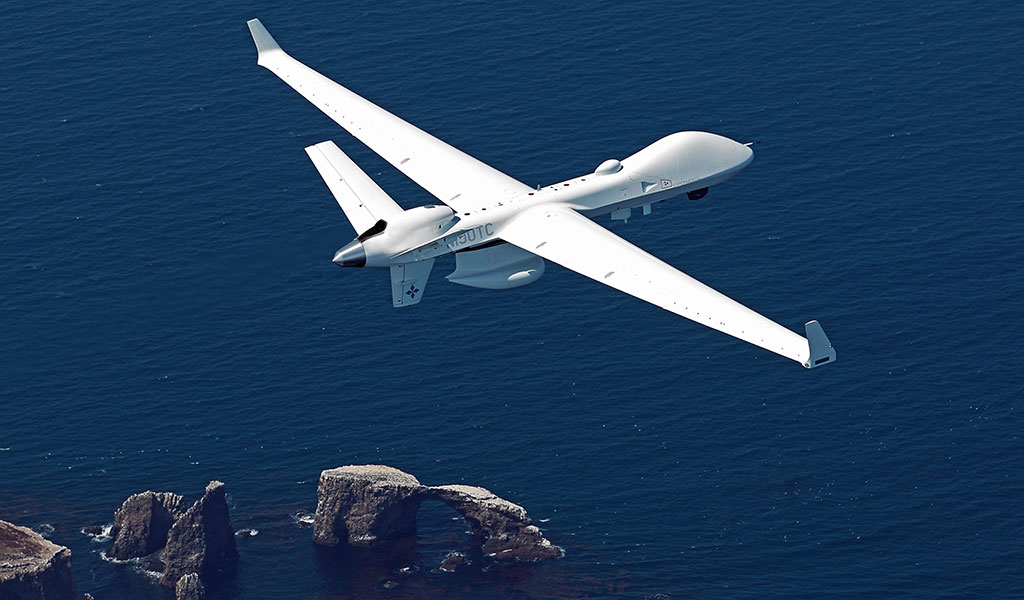
A year after India signed a $3.8 billion deal for 31 U.S.-built MQ-9B Sea/SkyGuardian drones for the armed forces, a potential procurement of 87 more similarly capable drones is moving forward. In that context, India’s Larsen & Toubro (L&T) and MQ-9B maker General Atomics Aeronautical Systems Inc. today announced an agreement to manufacture Medium Altitude Long Endurance (MALE) Remotely Piloted Aircraft Systems (RPAS) in India.
At its core, the agreement brings together two distinct but complementary strengths. General Atomics, which has developed and supplied the world’s most proven MALE platforms, including the famed MQ-9 Reaper and Predator series, brings cutting-edge technology and decades of combat and operational experience, quite apart from one of India’s largest defence supply contracts in the form of the 31 MQ-9Bs. L&T contributes its deep engineering, system integration and precision manufacturing capabilities, honed through decades of work across India’s defence, nuclear, and space sectors. The result, if it pans out as intended, could finally put India on the map as a serious player in the global unmanned systems market.
The partnership, according to a statement released today, envisions manufacturing the MQ-series of RPAS entirely in India, with critical technology transfers and significant indigenous content. L&T will be the prime bidder for the Ministry of Defence’s upcoming 87 MALE RPAS program, with General Atomics as the technology partner. The programme will fulfill the armed forces’ long-standing need for long-range, high-endurance, armed and unarmed drones for intelligence, surveillance, reconnaissance, and precision strike missions.
The collaboration also aligns with the Indian Government’s ‘Atmanirbhar Bharat’ and Make in India initiatives, which aim to reduce India’s dependence on imported defence hardware and build a globally competitive ecosystem. Importantly, this is not a simple assembly arrangement, say the two companies, signaling that manufacturing will include key structural, avionics, and systems components, ensuring meaningful capability transfer rather than screwdriver-level integration that has dogged most so-called tech partnerships.
India’s military drone capability has long lagged behind that of major powers. While indigenous programs like DRDO’s Tapas and Ghatak remain firmly in the realm of testing, India has had to rely on imports for critical missions. The Indian Navy already operate a pair of leased MQ-9B Sea Guardian drones, platforms that have demonstrated extraordinary endurance, often exceeding 30 hours of continuous flight. One of the drones that crashed in September last year in the Bay of Bengal has since been replaced under identical lease terms.
India’s homegrown drone ecosystem has so far been confined largely to smaller tactical systems, logistical cargo drones, kamikaze weaponry, swarming tech and infantry drones capable of short-range precision attacks using underslung missile loads (there are exceptions). Producing long endurance platforms in India will mark a major leap forward. It could dramatically improve surveillance along India’s borders, expand maritime domain awareness, and enable the armed forces to conduct persistent overwatch and precision engagement operations across vast areas. Beyond the military domain, such drones also hold potential for civil applications such as disaster management, border patrol, and environmental monitoring.
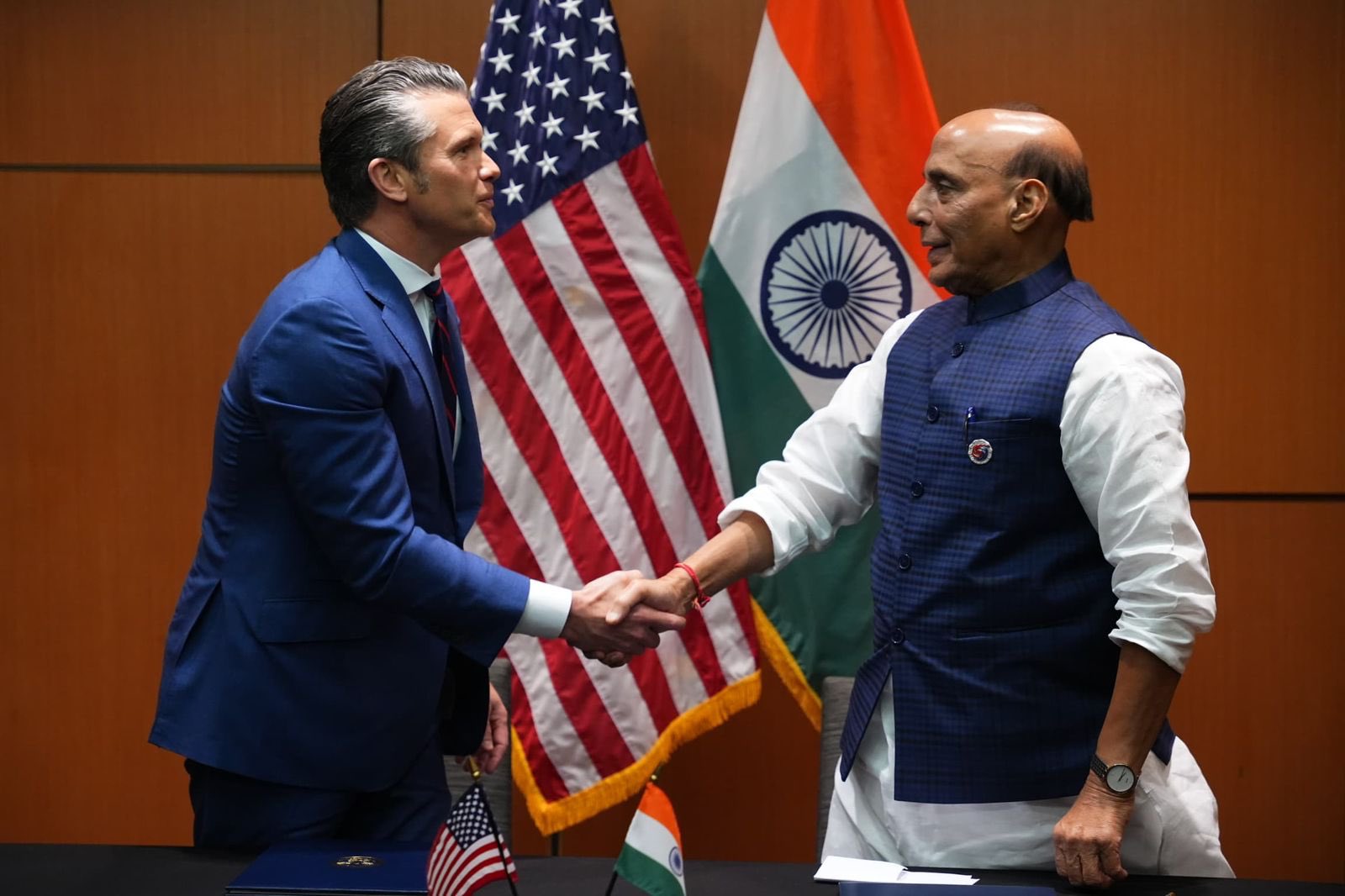
The deal is equally important from a geopolitical and industrial standpoint. Amidst a larger geopolitical churn on the trade front, the partnership strengthens the Indo-US defence partnership, a new framework on which was signed today by Indian Defence Minister Rajnath Singh and Secretary of War Pete Hegseth in Kuala Lumpur. By anchoring production in India, General Atomics not only expands its global supply base but also deepens its long-term commitment to India as a strategic partner. For L&T, this marks an elevation from being an integrator to becoming a prime manufacturer of combat-proven aerial systems, potentially opening export opportunities.
The partnership will also potentially energise India’s aerospace supply chain, engaging scores of micro, small, and medium enterprises (MSMEs) and creating a new ecosystem for high-precision aerospace manufacturing. This fits neatly with India’s vision of emerging as a defence export hub, with the government targeting $5 billion in annual exports by 2025.
S. N. Subrahmanyan, L&T’s Chairman and Managing Director, called the partnership a “unique opportunity to manufacture state-of-the-art unmanned platforms indigenously,” saying it would “significantly enhance India’s defence capabilities and advance self-reliance in aerospace technologies.”
Dr. Vivek Lall, Chief Executive of General Atomics Global Corporation, described it as “a collaboration that exemplifies our commitment to India’s vision for self-reliance and indigenous manufacturing,” adding that combining GA-ASI’s proven technology with L&T’s manufacturing prowess would yield cutting-edge RPAS solutions that “enhance the operational readiness of the Indian armed forces.”
If executed as envisioned, this partnership could become the cornerstone of India’s drone industrial base, not only meeting the immediate needs of the military but also laying the foundation for a future where India designs, builds, and exports its own next-generation unmanned systems. It is a clear signal that the age of India as merely a buyer of high-end military hardware is giving way to one where it becomes a trusted co-producer, and eventually, a creator.