
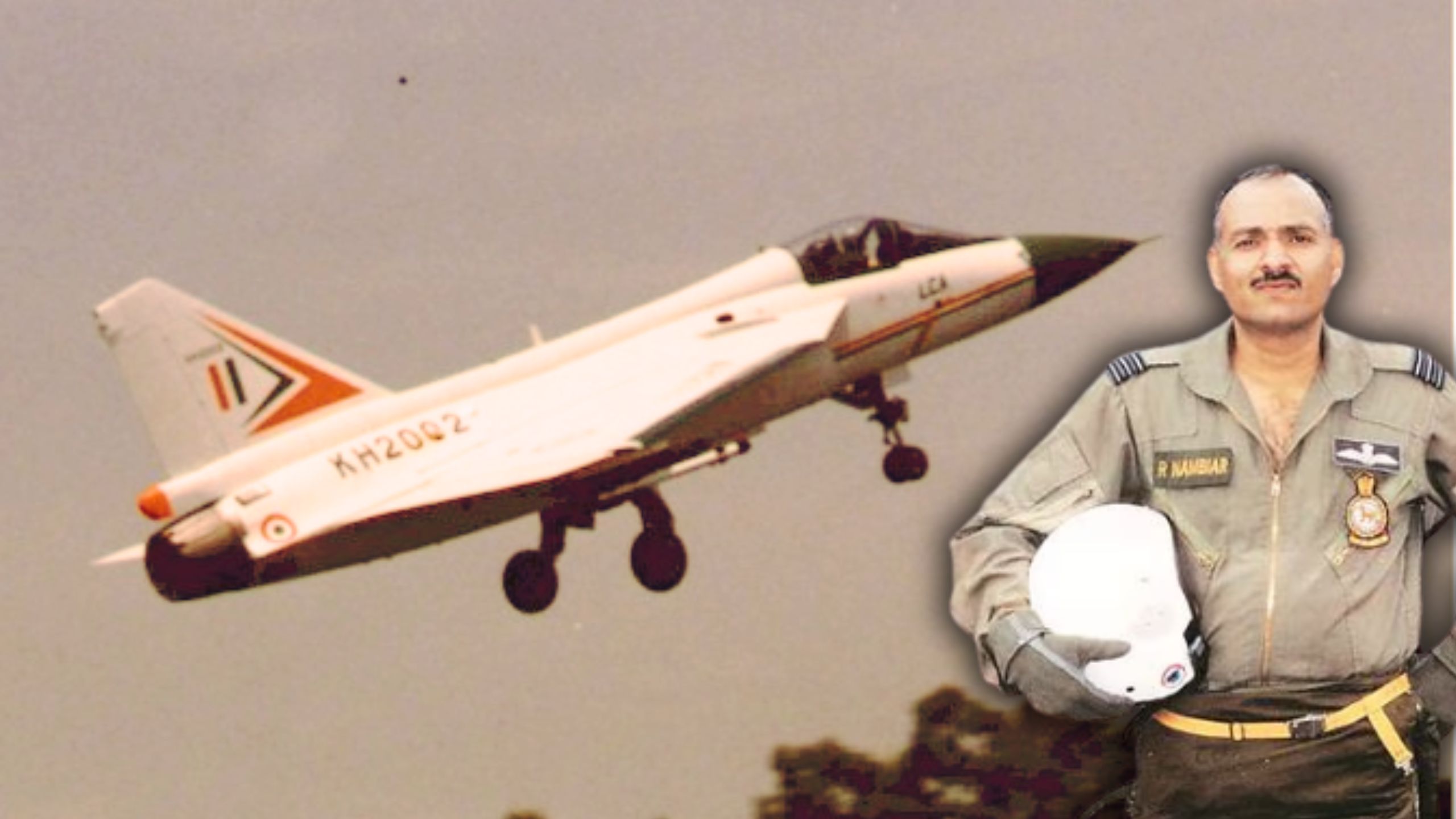
By Air Marshal Raghunath Nambiar (Retd.)
I still remember that crisp Bengaluru morning of 4th January 2001—the day the Tejas first took to the skies. Twenty-five years have passed since that moment, yet it remains etched in my mind with the sharpness of an afterburner plume at night. India was about to cross a threshold many thought impossible—the first flight of our own Light Combat Aircraft, a dream nurtured over decades, and realized through sheer perseverance, courage, and conviction.
Looking back now, the memories swirl in a mix of people, machines, and moments—each as vital as the others in making that memorable day possible. I can still feel the familiar hum of anticipation, the rustle of flight suits, the tense roar of afterburners. And then—that sudden collective exhale from all of us watching as the LCA took wing and soared into history.
Beginnings: The Call of a Dream
My association with the LCA program began in June 1992, right after graduating from the Test Pilot School in May that year. Back then, the program was just starting to find its feet. In fact, when Squadron Leader Uday Shankar and I were posted to the fledgling National Flight Test Centre (NFTC) in 1993, ADA then was little more than a big circular modern building, big dreams, and many dedicated souls determined to give India its own modern fighter aircraft.
Those were heady, uncertain times. The nation’s last indigenous fighter, the HF-24 Marut, had flown over three decades earlier, in June 1961. The Marut was a product of another era—modern for its time, but with conventional aerodynamics. The LCA, by contrast, was conceived as a truly modern aircraft: an unstable, quadruplex digital fly-by-wire system, a compound delta wing configuration, and a composite airframe that would make it as light as it was agile.
To be part of that transformation was a privilege of a lifetime, and in some ways, an enormous responsibility. We were quite literally writing the operating manual as we went along.
Designing a Cockpit from Scratch
In those early years, my work revolved around several crucial aspects—cockpit design, the Mission Preparation and Data Retrieval (MPDR) systems, and the control laws that would eventually govern how the pilot’s hand and foot movements translated into flight.
The control laws were the very soul of a fly-by-wire aircraft. If they were wrong or unstable, the aircraft could become unflyable in microseconds. To contribute to their evaluation and refinement, I participated in extensive in-flight simulations in the United States, testing the handling qualities of the LCA virtually before the actual hardware was ready. Each of these activities brought us closer to a real aircraft that would someday fly safely on its own. I was posted back to a Mirage 2000 Squadron in August 1995.
Between Mirage and Iron Bird
While most of my peers remained embedded in flying squadrons, I often found myself living a double life—shuttling between the comfortingly familiar Mirage 2000 squadron and the fascinatingly experimental world of NFTC, ADA. Even though I had formally returned to the Mirage by then, NFTC remained a second home in spirit. There, we spent countless hours working on the Real-Time Simulator (RTS) and the Iron Bird—the massive ground-based rig that replicated the aircraft’s control laws, hydraulic systems, and avionics architecture.
Return to the Fold
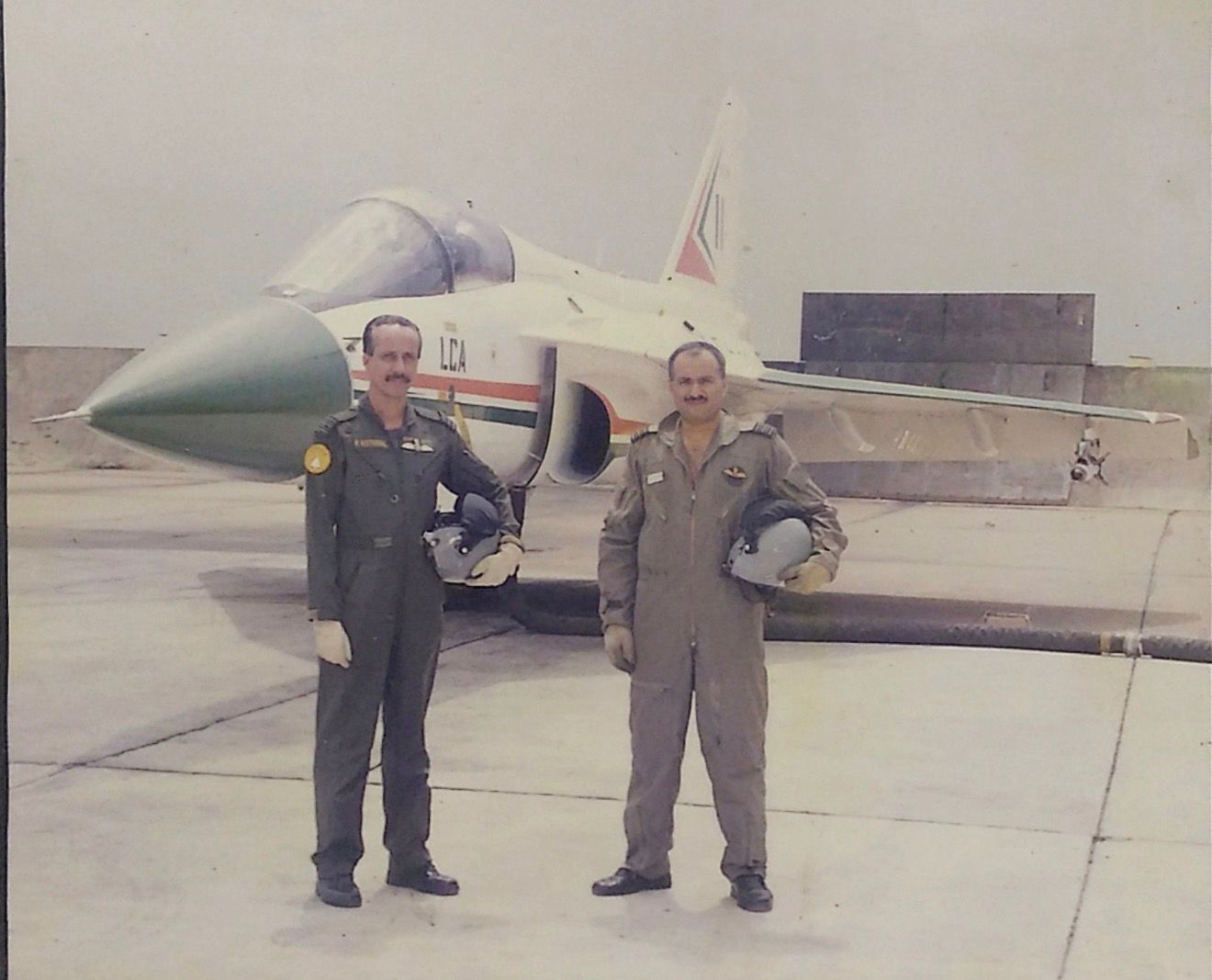
By 1999, as the dust of the Kargil conflict settled, I was deputed back to NFTC. The program had matured—systems testing was in its final throes, and the LCA’s first flight was just about a year and a half away. I was now a Wing Commander, sharing the flight line with Wg Cdr Rajiv “Koty” Kothiyal, who had been nominated as the pilot for the first flight. I was designated as the backup pilot—a role that, ironically, carries as much pressure as actually flying the aircraft.
There’s a quiet psychology to being the backup: you train, you brief, you rehearse every step, knowing you may not touch the controls that day—but must be fully ready to do so with zero warning. That pressure would soon test us all.
The Rehearsals
As the date drew near, every single element was rehearsed—repeatedly, and with the precision of a military campaign. We even used a MiG-21 Bis from ASTE as the stand-in LCA for some sessions, choreographing take-off sequences, chase formations, and emergency recoveries exactly as they would occur on the big day. Two Mirage 2000s were assigned as chase aircraft, and detailed standard operating procedures were written to govern every radio call, every visual position, and even the video angles for airborne filming.
In flight testing, professionalism is safety. Improvisation is inevitable—as things rarely go exactly as per set plans—but preparation is essential to spotting the pitfalls before they strike.
Morning of 4th January 2001
That winter morning in Bengaluru dawned bright, clear, and full of quiet electricity. I could sense that something extraordinary and magical was in the air. Before any flight, however, comes the simple ritual no pilot ever escapes: the medical clearance. That morning, Sqn Ldr Anjali Alam from IAM, a sharp and meticulous medical officer, was in charge of that formality. Poor Koty, like many seasoned aviators, suffered from a mild case of white coat syndrome—his blood pressure invariably spiked in medical tests. We all joked about it that day, trying to lighten the tension, but somehow, the mercury stayed steady enough for him to be cleared.
Inside the briefing room, the atmosphere was electric. The Chief of Air Staff himself—Air Chief Marshal A.Y. Tipnis—was present, slated to fly in the second chase Mirage. Senior ADA officials, DRDO scientists, and IAF officers filled the room. A detailed brief had already been completed the evening before. That morning, it was mainly about reaffirming the plan for the distinguished visitors. We went over abort sequences, chase aircraft formation changes, telemetry coordination, and post-landing taxi procedures.
The Ritual of Start-Up
At the tarmac, the LCA Technology Demonstrator 1 (TD-1) stood on the flight line, gleaming faintly in the sunlight—compact, elegant, and very Indian. The start-up and pre-takeoff checks were excruciatingly methodical, almost ruthless in their precision. The LCA’s fly-by-wire system required a series of diagnostic tests that consumed nearly ten minutes. Every subsystem was probed, every sensor cross-checked, every redundancy verified. There were protocols for how many times a test could be reattempted if a flag was thrown up. Many times before, we had seen green lights flicker to red—a single failed channel delaying entire days of effort.
That morning, as we watched from the chase cockpit, Koty’s calm voice crackled over the radio: “FBW test… green.”
That single sentence released all our tension. We could all breathe again.
The Flight Line
I was strapped into the lead Mirage 2000, with Sqn Ldr Suneet Krishna, a test pilot from ASTE, in the rear seat, carrying a video camera. In the second Mirage sat Wg Cdr T Banerjee, with Air Chief Marshal Tipnis in the rear seat. I also carried one of the newly introduced Sony digital still cameras— a novelty at the time.
There was something poetic about the formation: two French-built delta-wing Mirages escorting India’s own delta-wing creation, a symbolic passing of the torch.
The Moment of Truth
I lined up and rolled first, followed ten seconds later by the second chase. We took off cleanly, circled into position, and established visual contact with Koty, now lined up on the runway. “LCA cleared for takeoff,” came the voice from the Test Director, and I quickly tightened my turn to position myself so I could join up with the LCA. I then cleared Koty to roll.
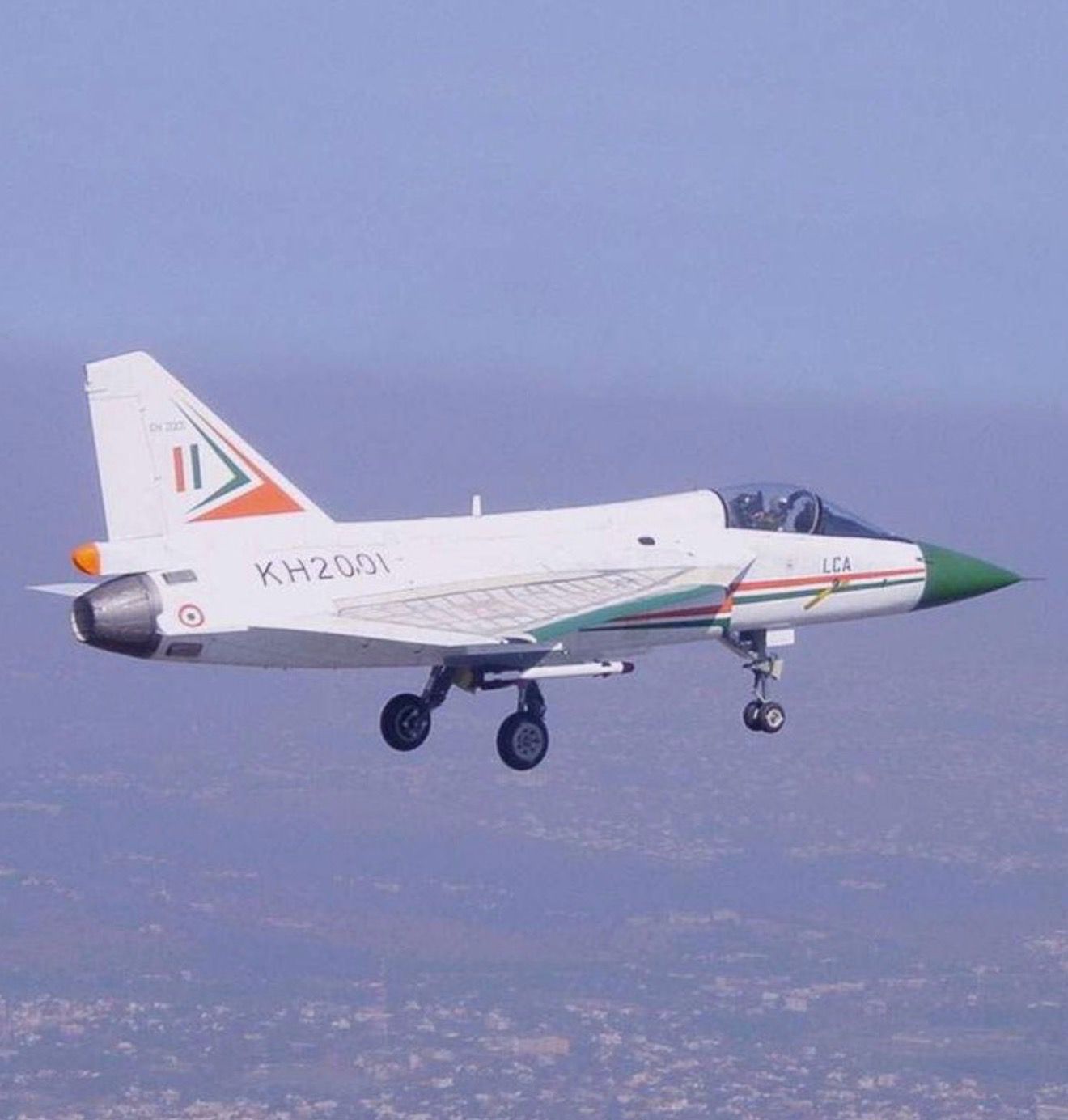
My eyes stayed glued to the LCA as she began to roll—graceful, determined, all raw potential. Then, almost imperceptibly, the nose lifted, and she broke contact with the ground…..India was airborne again—on her own wings, at last.
For a moment, absolute silence enveloped the cockpit. Then came a rush of gratitude, relief, pride—and a kind of disbelief that all those years of drawings, arguments, and simulations had finally become a living, flying machine.
Telemetry Falters
Barely seconds into the flight, trouble crept in. The telemetry link with the ground—our all-seeing eye into the aircraft’s heart—had been lost. Streams of digital data, parameters, and vital performance readings simply stopped updating. In test flying, that’s a serious issue; telemetry is the nervous system of flight safety.
The Flight Test Director immediately declared the failure. The plan now was to keep things simple: basic handling checks, visual system validation, speed calibration, and immediate recovery for landing.
Flying close, I could sense the tension of the moment. Koty, however, sounded completely in control. The LCA, for its part, looked rock steady.
A Close Escort
Because the LCA lacked an air data boom, we had no accurate pitot-static readings to derive precise airspeed. The control laws for the first flight were thus flown with fixed gains, adding another degree of vulnerability. I’d taped small look-up tables to my canopy—for converting the Mirage’s calibrated airspeed (in knots) to the LCA’s (in kilometres per hour), and feet to metres for altitude. I called out numbers periodically to help Koty validate his HUD readings.
“Speed looks good. Attitude stable,” I called over the R/T. “Navigation system matches well.”
The LCA kept its landing gear down throughout, as per the plan, to preclude unnecessary risks. Flying close, I conducted a detailed visual inspection: no leaks, no flutter, no anomalies. She was as solid as we had hoped.
Lining Up for History
Together we three steered toward the long final approach for Runway 09. I held formation slightly low and aft of the starboard side of the LCA, letting my camera capture her against the sunlit haze of the Bengaluru skyline—a moment frozen forever in my memory and a few treasured photographs. Banjo stayed further to my right.
As Koty turned onto long final, the aircraft glinted briefly in the light, poised, composed, and utterly beautiful. The touchdown was smooth, with barely a puff of smoke from the wheels. The tail chute was deployed as per plan. All in the air and on the ground must have been relieved as the LCA rolled out gently, taxied clear, and came to a halt exactly where the landing inspection team waited.
Reflections on a Quarter Century
Looking back now, twenty-five years later, I feel a deep, enduring pride in what that flight represented—not merely as an aviation milestone, but as a quiet triumph of Indian scientific will and perseverance. The LCA was the outcome of a vast, tightly knit effort, drawing together teams from multiple organisations in a complex, interlocking enterprise. It was a formidable managerial challenge, with well over a thousand men and women working in concert to lift us into the sky and carry India’s long-cherished dream aloft.
The Light Combat Aircraft programme faced scepticism at every turn—over feasibility, capability, funding, engines, timelines, and even purpose. Many doubted whether a nation that had, for years, lacked an active indigenous fighter design base could realistically produce an aircraft of this sophistication. Yet, on that magical January day in 2001, with one unassuming takeoff and a single, graceful 18 minute long circuit of the airfield, we demonstrated that India could once again imagine, design, and fly an advanced combat aircraft of its own.