
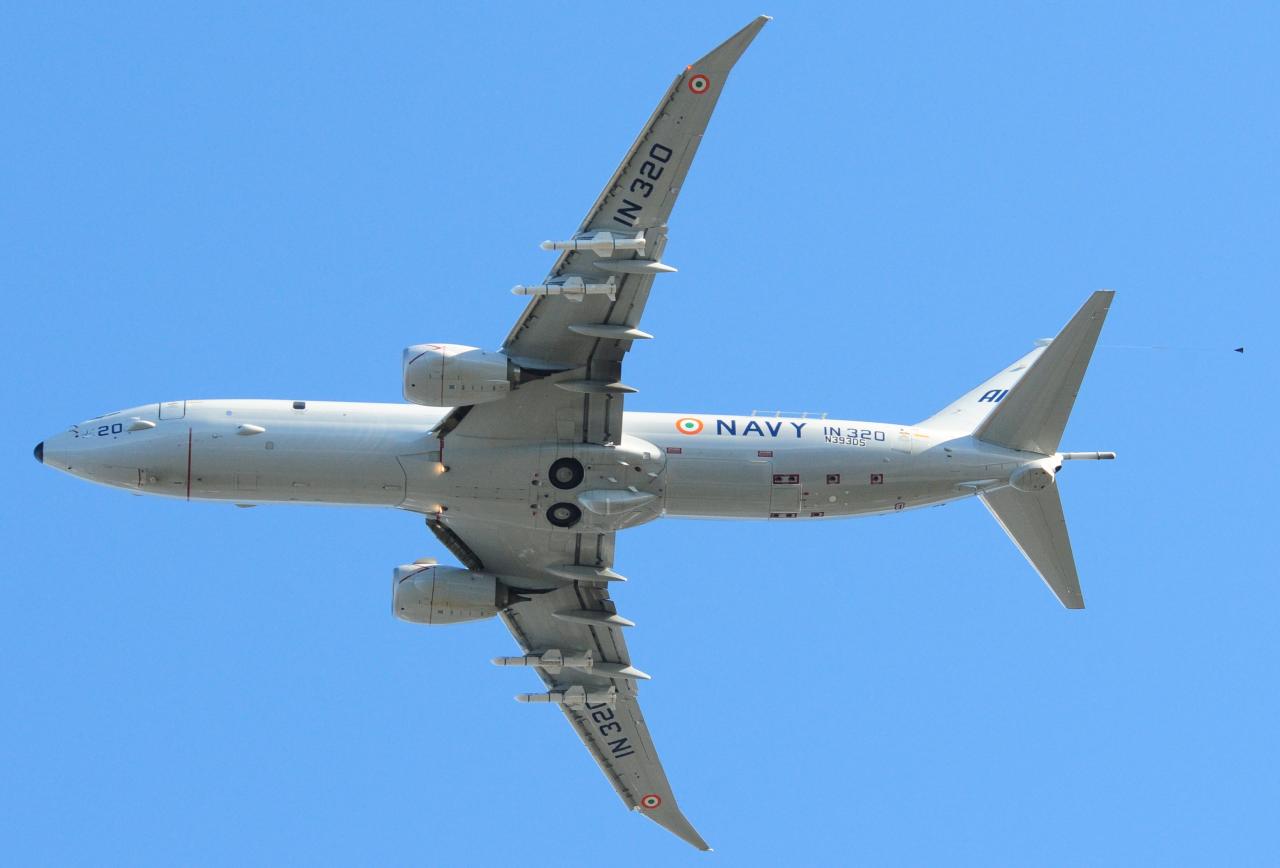
In a significant move that underscores a definitive restoration of strategic warmth between New Delhi and Washington, the Indian MoD has formally cleared a long-stalled deal for six additional Boeing P-8I long-range maritime reconnaissance/anti-submarine aircraft. The decision, finalized during a high-level Defence Acquisition Council (DAC) meeting on February 12 marks the end of a multi-year purgatory for the procurement. For the Indian Navy, which has long sounded the alarm over a dwindling fleet of specialised submarine hunters amid burgeoning Chinese naval footprints in the Indian Ocean, the clearance is a strategic lifeline.
The timing of the approval is as much a triumph of diplomacy as it is of defence planning. It comes in the immediate wake of an interim trade framework between Prime Minister Narendra Modi and President Donald Trump earlier this month. This framework serves as a critical thaw after nearly a year of unprecedented diplomatic friction triggered in the wake of Operation Sindoor, India’s May 2025 cross-border missile strikes following the Pahalgam terror attack. While that operation initially strained ties with Washington due to concerns over escalation, the new trade deal and the subsequent clearance of the P-8Is signal that the indispensable partnership has transitioned back to business as usual, prioritising the shared goal of a stable, surveillance-heavy Indo-Pacific.
The P-8I occupies a unique pantheon in the history of Indian military aviation. While more photogenic platforms like the AH-64E Apache attack helicopters, the CH-47F Chinook heavy-lift rotors, and the C-17 Globemaster III transports have dominated headlines and Republic Day flypasts, it is the P-8I that has arguably become the most meaningful induction of the 21st century. Unlike transport or strike assets that wait for a crisis to occur, the P-8I is a working aircraft, flying thousands of hours every year in a relentless, silent vigil over the waves. And indeed over land too.
The P-8I’s journey in India began in January 2009, when India became the first international customer for the platform, ordering eight aircraft in a landmark $2.1 billion deal. This was followed by an optional order for four more in 2016. Since the first airframe landed at INS Rajali in Arakkonam, Tamil Nadu in 2013, the fleet has become a Swiss Army Knife of sorts for the Indian Navy. It replaced the venerable but aging Soviet-era Tu-142Ms, bringing with it a leap in technology that felt, in the words of crews at the time, like moving from a telegram to a smartphone.
The Indian Navy’s love affair with the P-8I is rooted in its versatility. It is not merely a maritime patrol aircraft, but a flying command-and-control center. The Indian Navy has deployed these aircraft far beyond their traditional roles of anti-submarine warfare (ASW) and anti-surface sarfare (ASuW). During the 2017 Doklam standoff and the subsequent 2020 Ladakh standoff, P-8Is flew over the high-altitude peaks of the Himalayas. Their high-resolution EO/IR (Electro-Optical/Infrared) sensors and advanced radar systems provided the Indian Army with critical real-time battlefield surveillance that few other platforms could match.
In its primary domain, the Indian Ocean, the P-8I has been the primary tool for shadowing the increasing number of People’s Liberation Army Navy (PLAN) submarines venturing into the Bay of Bengal and the Arabian Sea. With a mission radius of over 1,200 nautical miles and four hours of loiter time on station, the P-8I allows the Indian Navy to keep an eye on distant chokepoints like the Malacca Strait while operating from the Indian mainland or the Andaman and Nicobar Islands.

One of the most overlooked aspects of the P-8I’s success in India is how Indian” the aircraft actually is. While built on a Boeing 737 airframe, the P-8I is distinct from the US Navy’s P-8A Poseidon. At the insistence of the Indian Navy, the aircraft includes a Magnetic Anomaly Detector (MAD) sensor, a “sting” in the tail used to detect the magnetic signature of a submarine’s hull, a feature the US version lacks. Furthermore, the aircraft is heavily integrated with indigenous systems developed by Bharat Electronics Limited (BEL) and other Indian firms. These include the Data Link II communications system, which allows the P-8I to talk seamlessly to Indian ships, submarines, and shore-based stations. It also features Indian-made Identification Friend or Foe (IFF) transponders and an indigenous speech secrecy system. This integration ensures that while the “eyes” and “ears” are American, the “brain” and “voice” of the platform are firmly Indian.
As the Indian Navy prepares to order these six additional aircraft, the maritime surveillance ecosystem in India is undergoing a broader transformation. While Boeing remains the king of the high-altitude, long-range segment, its European rival Airbus is making significant inroads on the ground in Gujarat. In Vadodara, the Tata-Airbus Final Assembly Line (FAL) for the C295 aircraft is now operational. While the C295 started as a tactical transport for the Indian Air Force, it is rapidly evolving into a maritime powerhouse.
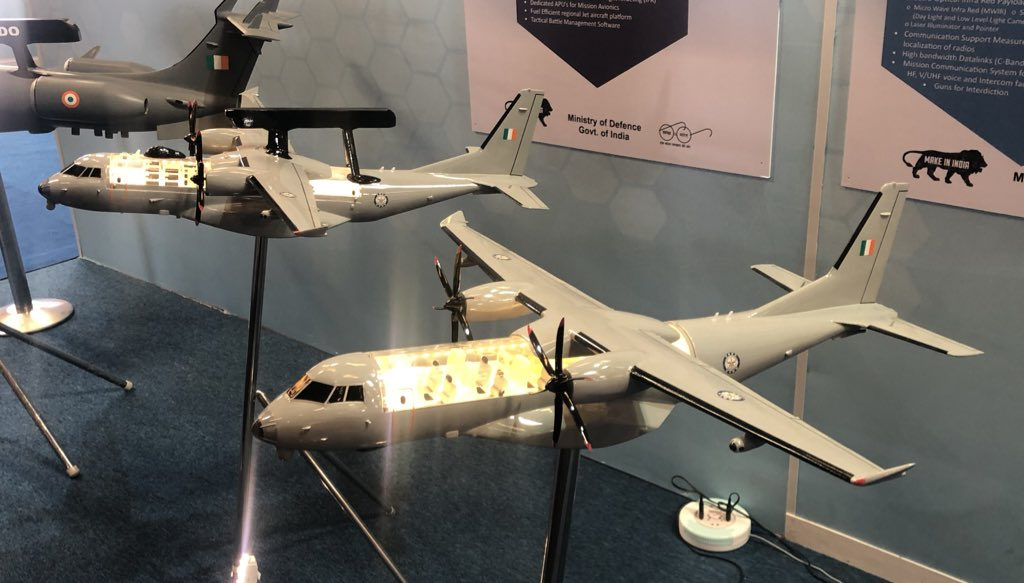
The Ministry of Defence has already cleared plans for a specialized multimission maritime aircraft (MMMA) variant of the C295, destined for both the Indian Navy and the Indian Coast Guard. These aircraft will be equipped with an indigenous sensor suite developed by the DRDO’s Centre for Airborne Systems (CABS). The C295 will serve as a “Medium Range” partner to the P-8I. The logic is one of operational economy: the P-8I is a high-end, expensive-to-operate asset best reserved for deep-ocean hunting and strategic surveillance. The C295, built in India, will take over the bread and butter tasks, monitoring the Exclusive Economic Zone (EEZ), coastal security, and anti-piracy patrols. This ‘High-Low’ mix will allow the Indian Navy to saturate the Indian Ocean Region with persistent surveillance, ensuring that no vessel, surface or submerged, moves through these waters without being logged by an Indian sensor.
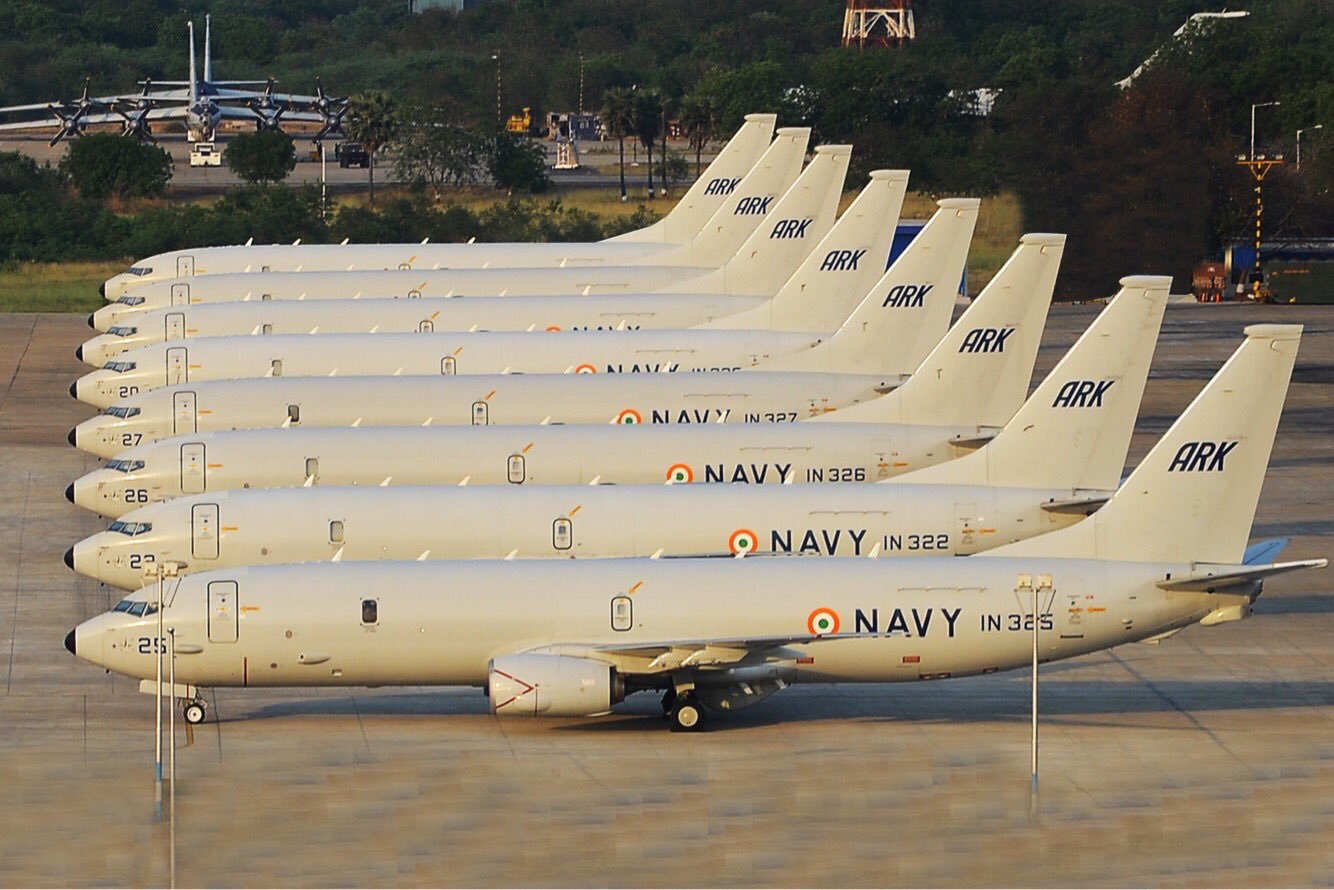
The clearance of the six additional P-8Is also serves as a potent symbol of the maturation of the India-US defense relationship. It proves that despite diplomatic turbulence, the underlying tectonic plates of the relationship are held together by a shared concern over the rise of an assertive maritime power in the East. For Boeing, the deal is a validation of its long-term commitment to the “Make in India” initiative, as it sources significant components for its global P-8 fleet from Indian suppliers like HAL, Dynamatic Technologies and Rossell Techsys.
As these six new P-8Is eventually join their sisters at INS Rajali and INS Hansa, they will arrive in an Indian Ocean that is more contested than ever. The Indian Navy’s expanding responsibilities, from acting as first responder in humanitarian crises to securing the vital sea lines of communication (SLOCs) that carry the world’s energy, demand a fleet that can see further and hit harder. With the P-8I deal finally back on track, and the C295 production line humming in Vadodara, India’s “eyes in the sky” remain steady.