
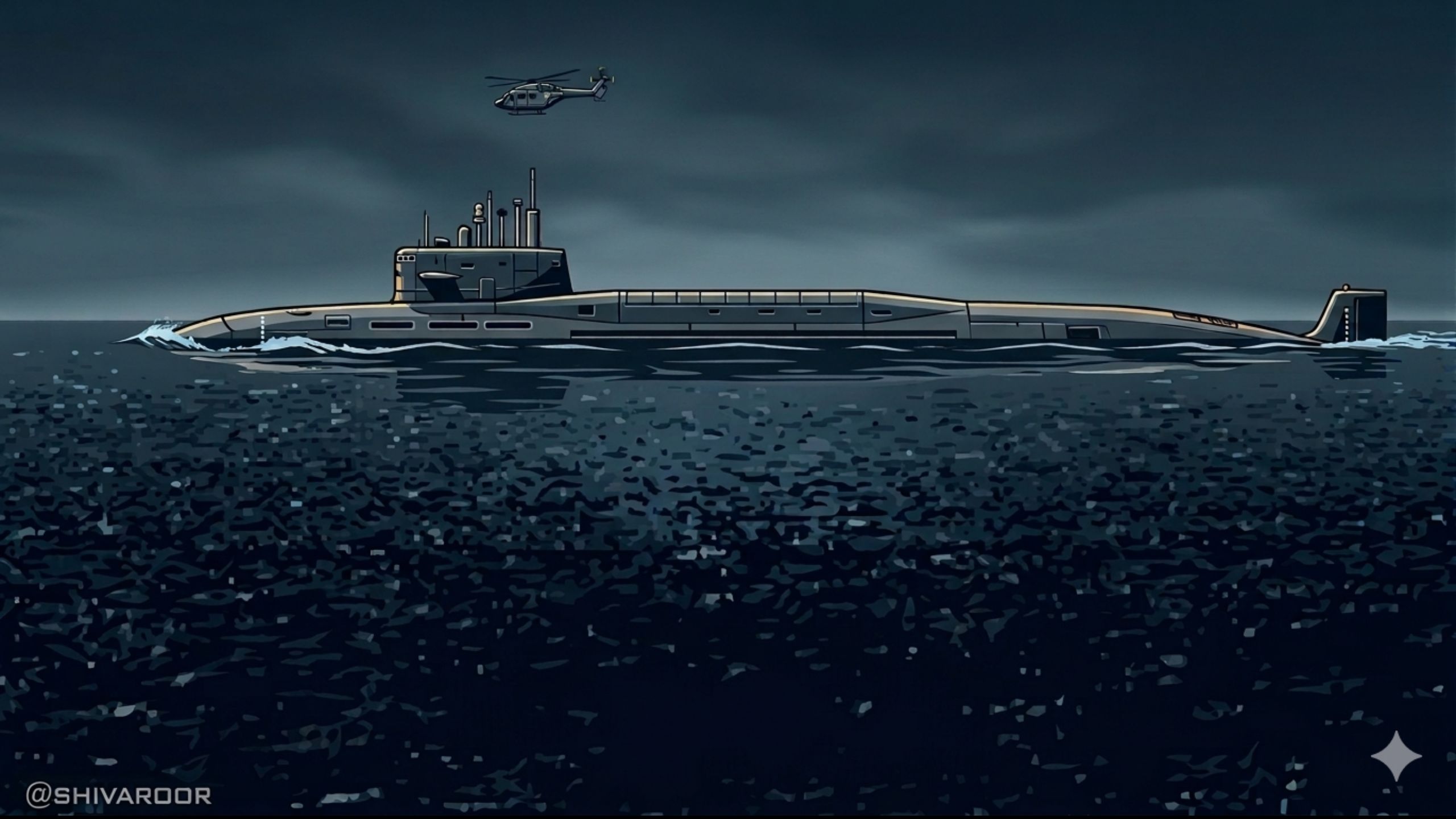
India’s nuclear triad, once a nascent strategic ambition, has today achieved a level of operational maturity that places it in an elite bracket of global naval powers. With the commissioning of INS Aridhaman, the third nuclear powered ballistic missile submarine (SSBN) of the Arihant class, the Indian Navy and the Strategic Forces Command (SFC) have finally secured the holy grail of maritime deterrence: the ability to maintain a continuous at-sea nuclear presence.
The commissioning ceremony at the Ship Building Centre (SBC) in Visakhapatnam today marks more than just the addition of a hull. For the first time, India possesses the requisite numbers to ensure that at any given moment, at least one nuclear armed boat is on a deep-sea deterrent patrol. With a three-boat rotation, one submarine can remain on active patrol, a second can be in a state of high readiness or transit, and a third can undergo necessary maintenance or refit. This flexibility is the bedrock of a credible ‘No First Use’ policy, ensuring a survivable second-strike capability that no adversary can ignore.
While the lead ship, INS Arihant, was a technology demonstrator and INS Arighaat (commissioned in 2024) refined those systems, INS Aridhaman is a more formidable boat altogether. Though they share a common lineage, Aridhaman features a stretched hull, allowing it to carry a significantly larger payload.
While the early boats were primarily equipped with the 750 km range K-15 Sagarika missiles, Aridhaman is designed from the keel up to prioritize the K-4 intermediate-range submarine-launched ballistic missile (SLBM). With a range of 3,500 km, the K-4 allows the submarine to remain deep while holding targets across the entire region, and deep into mainland China, at risk. The submarine features eight vertical launch tubes, doubling the long-range strike capacity compared to the earlier configuration of four tubes on the Arihant.
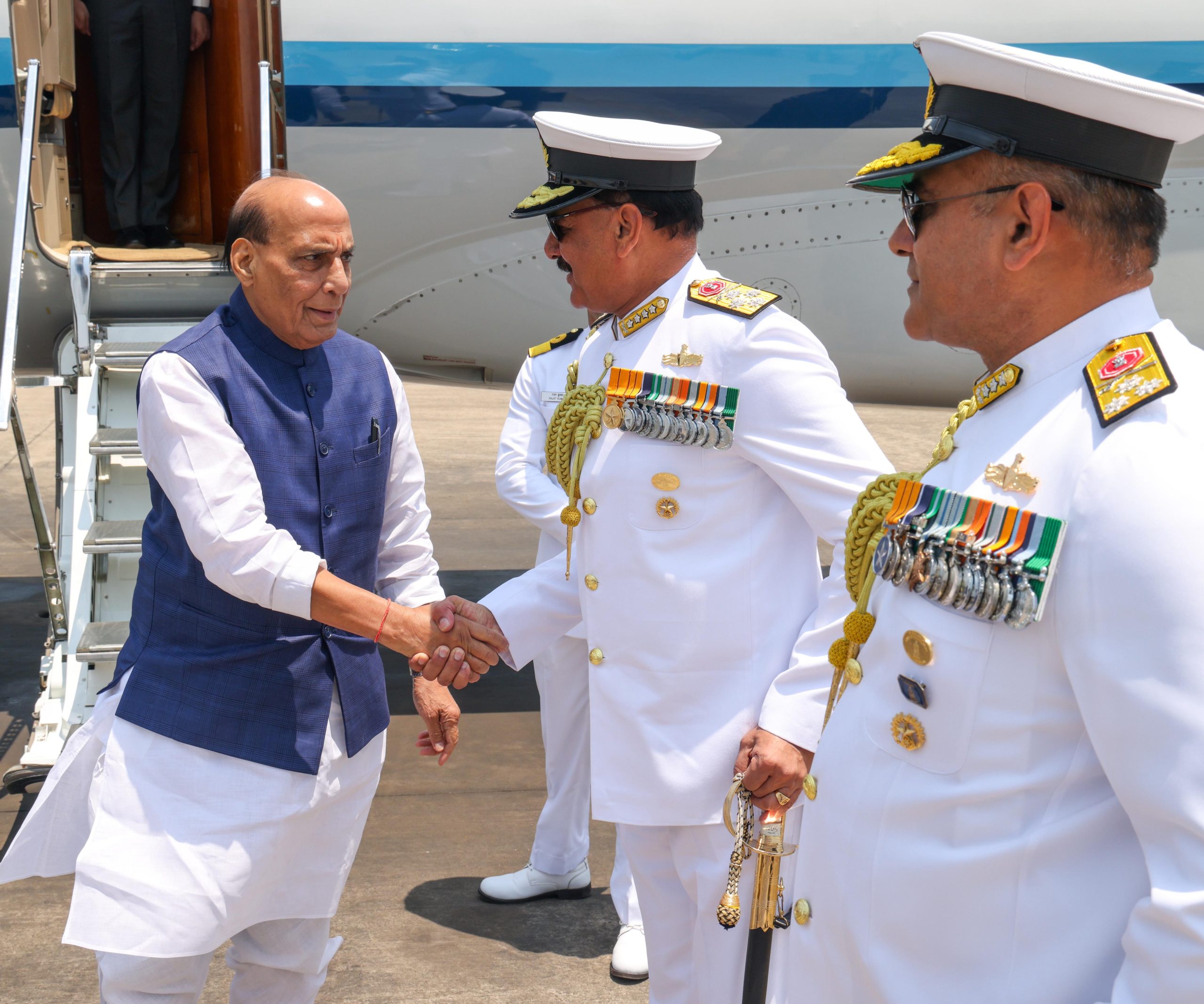
Beyond the tubes, Aridhaman benefits from a more refined indigenous 83 MW pressurized light-water reactor. This provides better power density and, crucially, a lower acoustic signature. In the world of undersea warfare, silence is the only armour that matters, and Aridhaman is reportedly not just India’s most formidable defence platform ever built, but also the quietest indigenous boat ever put to sea.
The commissioning comes at a time when the Indian Ocean has become increasingly crawling with foreign nuclear presence. For years, the Indian Navy has tracked the periodic prowling of Chinese Shang-class (Type 093) SSNs in these waters. However, the stakes of undersea dominance were most brutally illustrated exactly one month ago. On March 4, the US Navy Los Angeles-class attack submarine USS Charlotte torpedoed and sank the Iranian frigate IRIS Dena off the coast of Sri Lanka.
While the incident occurred within the context of the US-Iran hostilities, the location, just off the Indian coast, served as a chilling reminder of how vulnerable surface assets are to high-end nuclear attack submarines. It also highlighted a glaring gap in India’s own order of battle: the lack of indigenous SSNs.
In a strategic irony, India has mastered the complex art of the “boomer” (SSBN) before building the more agile, workhorse hunter-killers (SSNs) needed to protect them. While the SSBN program has hit its rhythm with Aridhaman, the project to build six indigenous nuclear attack submarines was only formally flagged off by the Cabinet Committee on Security (CCS) in October 2024. Until those boats arrive in the mid-2030s, India remains dependent on periodic leases of Akula-class submarines from Russia. The next leased boat, Chakra III, is expected to enter service in approximately two years, but these are mere symptoms of a long-standing capability gap.
Compared to China’s Jin-class (Type 094) SSBNs, which carry the JL-2 and JL-3 missiles, India’s Arihant class is smaller and carries fewer missiles. However, the commissioning of Aridhaman proves that India has overcome the steep learning curve of nuclear shipbuilding. The Arihant-stretch design has allowed the Navy to hit a production cadence that is now predictable and reliable.

The true leap, however, lies in the future S5-class. If the Arihant class represents India’s entry into the club, the S5 will be its true blue boomer. Displacing nearly 17,000 tonnes, more than double the Aridhaman, the S5 will carry 12 to 16 long-range missiles, including the MIRV-capable K-5 and K-6. With a 190 MW reactor currently under development by BARC, the S5 will be a global-reach platform, finally placing India on an equal footing with the top-tier of the P5 navies.
For now, INS Aridhaman is India’s most formidable and complex defence platform. It represents the pinnacle of indigenous engineering, involving a massive ecosystem of private players like Larsen & Toubro and state agencies like DRDO and BARC.