
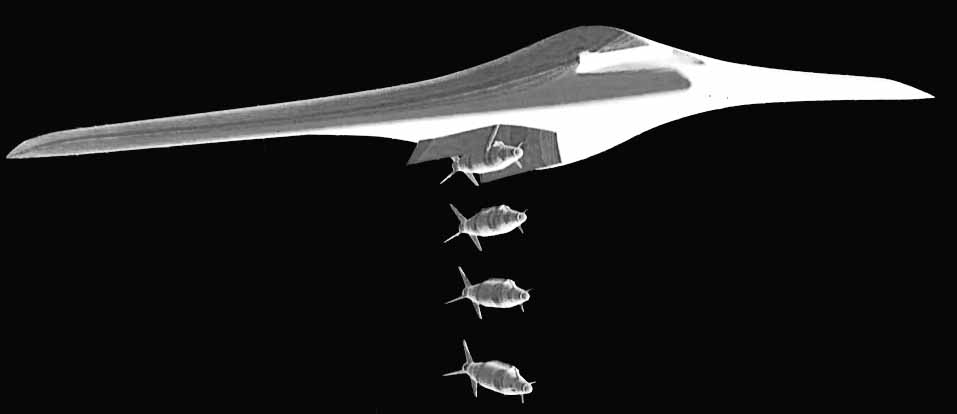
The Indian Ministry of Defence (MoD) has formally greenlit a forecasted requirement for four squadrons of India’s under-development Ghatak stealth combat drone, a move that signals a tectonic shift in the Indian Air Force (IAF) strike architecture. The decision, cleared by the Defence Acquisition Council (DAC) today, marks the first time India has committed to a specific, large-scale force structure for a dedicated unmanned combat aerial vehicles (UCAV).
This development is the latest sign of India’s pronounced focus on unmanned systems and drone warfare. While the Ghatak program has been a quiet, high-priority “black project” for over a decade, the urgency has been amplified by the harsh realities of the Ukraine war and, more recently, the evolving conflict in Iran. The MoD’s sign-off on four squadrons, totaling perhaps 60-80 airframes, reflects real-time learnings from Chinese developments and the general efficacy of stealth aircraft.
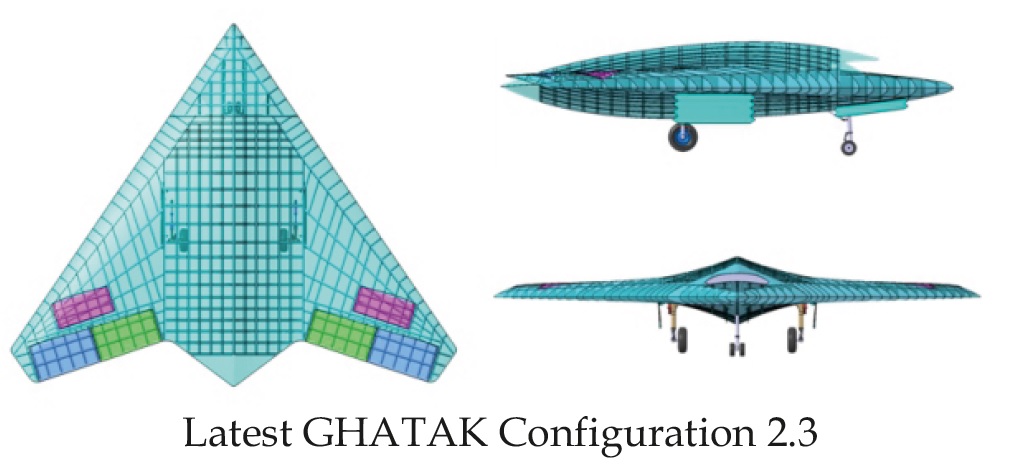
The Ghatak, which began its life as Project AURA (Autonomous Unmanned Research Aircraft) around 2010, was first revealed in detail by Livefist. For years, the project has remained shrouded in secrecy, administered by a high-level team reporting directly to the Prime Minister’s Office. It was always intended to be a national imperative, a platform that would allow India to conduct deep-strike missions in highly contested airspaces without risking a pilot.

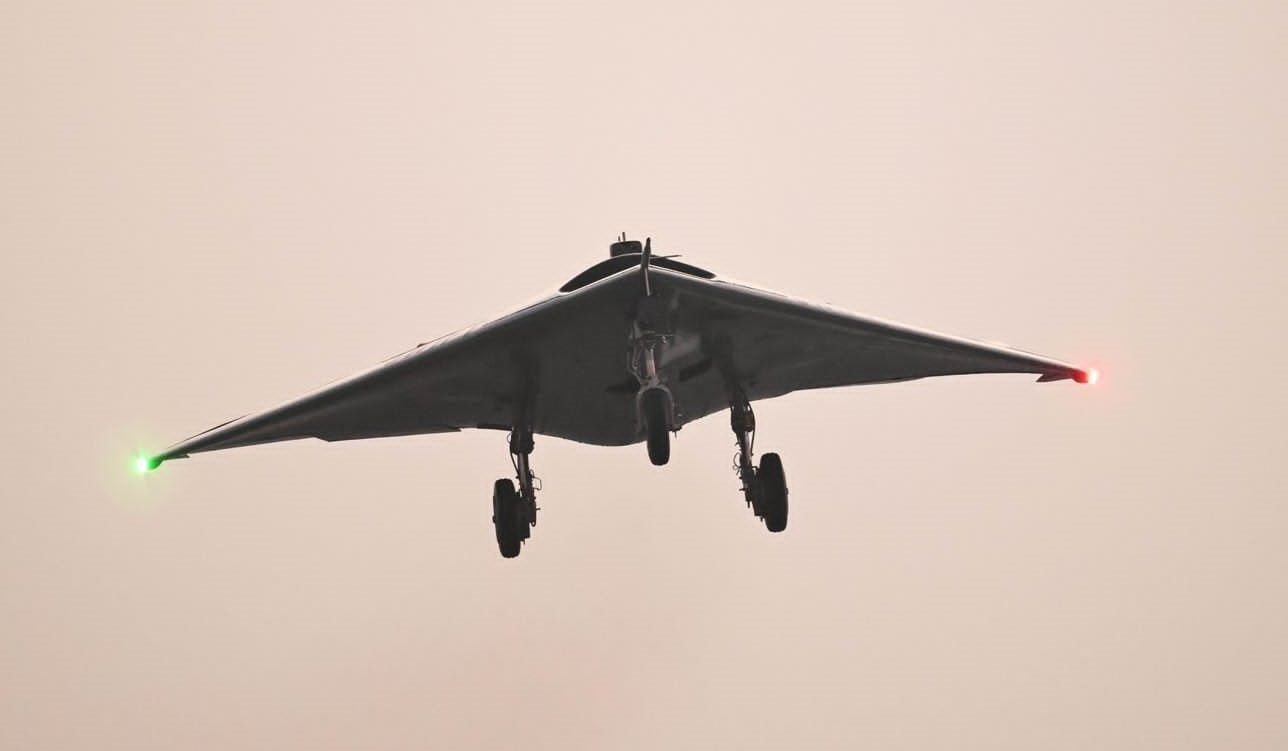
The road to this week’s squadron approval has been paved by the success of the Stealth Wing Flying Testbed (SWiFT). As Livefist has reported through the years, the SWiFT was a 1-ton technology demonstrator designed to prove the complex flying wing configuration, a design that lacks a vertical tail to minimize its radar cross-section. In July 2022, the SWiFT took to the skies at the Aeronautical Test Range in Chitradurga, proving that Indian scientists had mastered the flight control laws for a tailless, unstable aircraft.

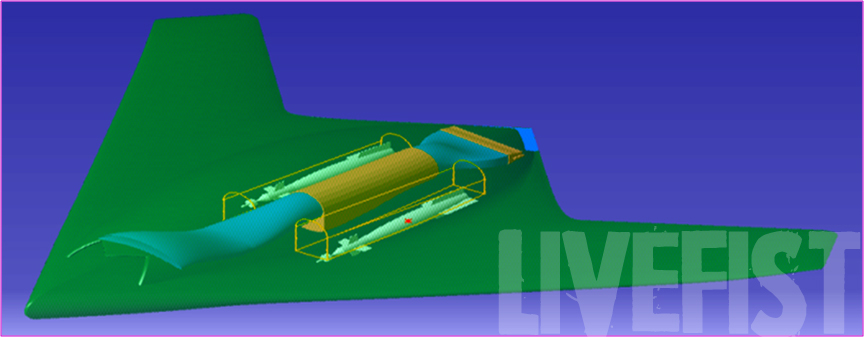
The full-scale Ghatak will potentially be a much more formidable aircraft. Weighing under 15 tons and powered by a “dry” (non-afterburning) variant of the indigenous Kaveri engine, the UCAV is designed to carry precision-guided munitions in an internal weapons bay. This internal carriage is crucial for maintaining its stealth profile, ensuring that no external pylons or missiles “glint” on enemy radar.
The Indian security establishment has been a keen observer of the drone-first doctrine that has defined the Ukraine war. From the early success of the Bayraktar TB2 to the swarms of low-cost loitering munitions, the conflict has proven that unmanned systems can paralyse conventional armored columns and penetrate sophisticated air defences.
However, the Ghatak represents a tier of warfare above the attritable drones seen in Ukraine, Operation Sindoor and Iran. It is a high-end, survivable strategic asset. The ongoing war in Iran and the broader Persian Gulf has further underscored the need for such systems. The use of long-range, jet-powered drones in that theater has shown that precision mass can overwhelm even the most advanced integrated air defence systems.
Indian planners recognize that in a potential conflict with a technologically advanced adversary like China, the first few hours of war will involve a brutal suppression of enemy air defenses (SEAD) campaign. The Ghatak is being groomed for this first wave role. By deploying stealthy UCAVs to take out enemy radar installations and surface-to-air missile batteries, the IAF can create sanitized corridors for its crewed fighters like the Rafale and the upcoming AMCA.
The approval of four squadrons suggests a deployment pattern that covers both the northern and western fronts. It also fits into the broader Vision 2047 roadmap recently articulated by the IAF leadership. This roadmap does not see drones replacing manned fighters but rather acting as force multipliers.
The Ghatak could be a serious cornerstone cornerstone of India’s Manned-Unmanned Teaming (MUM-T) efforts. In this concept, a single manned fighter, such as a Tejas Mk2 or a Su-30MKI, could control a swarm of Ghatak UCAVs, using them as forward sensors or remote weapon bays. This allows the manned pilot to stay out of the engagement zone while the UCAVs do the heavy lifting in the most dangerous parts of the battlefield.

As Livefist has previously detailed, the Ghatak project is technologically yoked to the AMCA (Advanced Medium Combat Aircraft) fifth-generation fighter program. The lessons learned in radar-absorbent materials (RAM), serpentine intakes to hide engine blades, and autonomous flight data links are being shared between the two programs. The MoD’s move to fund four squadrons of the drone version first may suggest a desire to mature these “sixth-generation” technologies on an unmanned platform before they are fully integrated into the manned AMCA.
Despite the formal approval, the path to an operational squadron remains steep. The most critical hurdle remains the engine. While the Kaveri engine has seen a revival of sorts, ensuring it has the reliability and stealthy exhaust signature required for a UCAV of this class is a significant engineering challenge. There are also questions about the brain of the aircraft. A stealth UCAV operating in a denied environment cannot rely on a constant satellite link that might be jammed. It requires a high degree of onboard AI to make combat decisions autonomously.
Also, the transition of the project from the Aeronautical Development Agency (ADA), which handled the initial design, to the Aeronautical Development Establishment (ADE), which is leading the flight testing and productionisation, must be seamless. Previous reports on Livefist have noted the internal debates within the DRDO regarding the program’s leadership and the speed of development.
Skeptics will rightly wonder about the path to an operational Ghatak platform, mirroring in many ways the lack of clarity over how the AMCA will turn out. For a country still fighting to get deliveries of an improved fourth-gen Tejas Mk1A fighter, on the threshold of a monster deal for 114 Rafale fighters from France, committed to an expensive upgrade of its Su-30 fighters and nowhere near proving the many technologies required for the composite ecosystem that makes up a stealth strike drone, is clearance for a four squadrons of the Ghatak more an indicator of “something needs to be seen to be done” rather than the substance of the program itself.
The MoD’s forecasted requirement of four squadrons is more than just a procurement number. And India’s experience with Acceptance of Necessity (AoNs) is frequently an exercise in the theatre of the absurd, given timelines and budgetary pressures/priorities. But it is a declaration of intent. It tells the world, and India’s neighbors, that the IAF is preparing for a future where the first contact in the air will not be between pilots, but between algorithms and low-observable airframes.
For years, the Ghatak was a demure model tucked away in corners of aero-shows or a grainy video of a test flight in rural Karnataka. With this latest approval, the ghost proverbially come out of the shadows. As India watches the skies over Ukraine and the Middle East, it is clear that the Ghatak is no longer just a research project, but a national imperative that has finally found its place in the IAF order of battle. The era of the Indian stealth unmanned bomber has at least officially begun.