
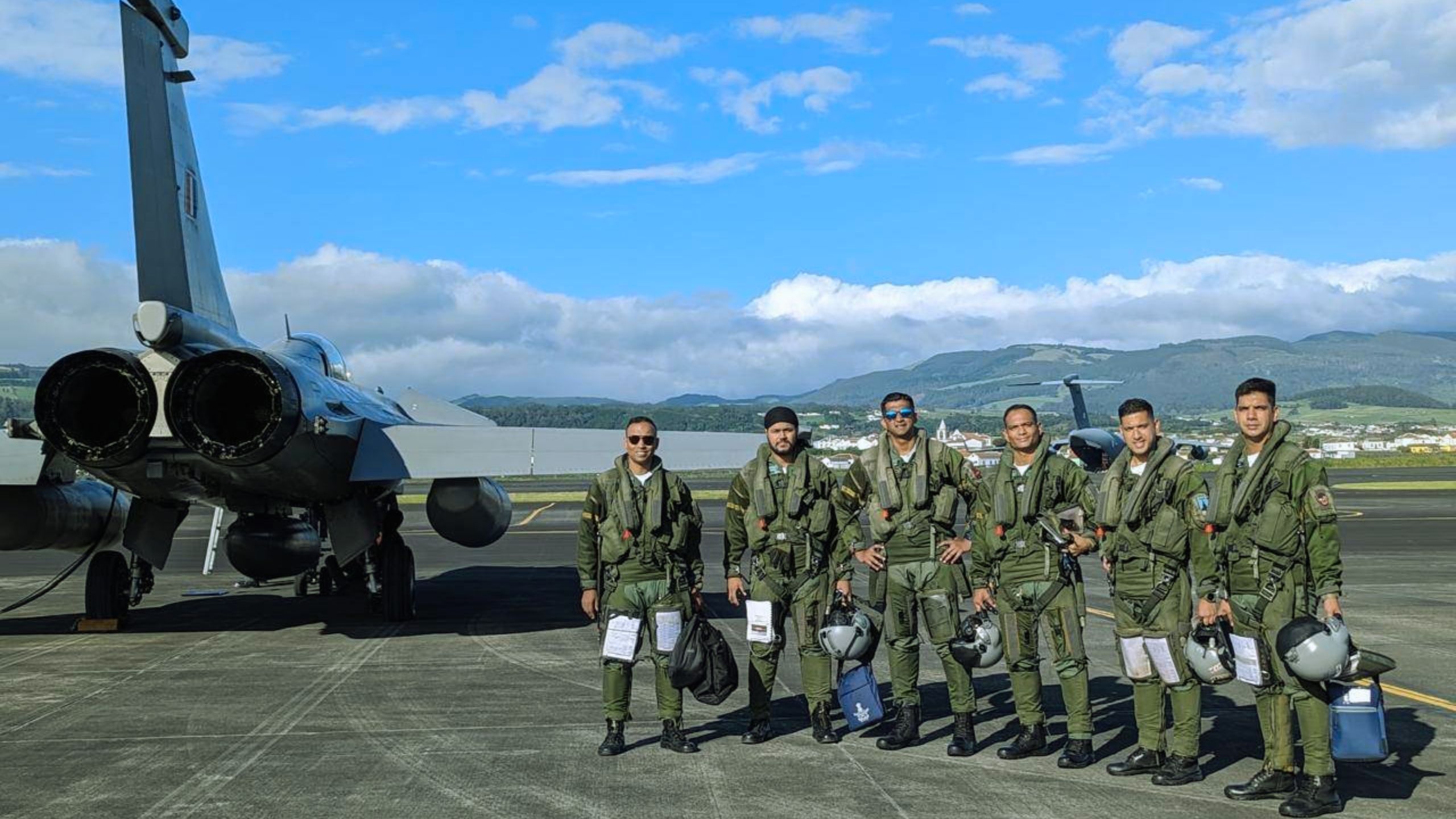
In a move that could signal the end of one of the world’s most protracted defence procurement sagas, the Indian Government is reported to be slowly converging on a decision to order 114 more Rafale fighters for the Indian Air Force. The decision, if it happens, effectively closes the chapter on the Multirole Fighter Aircraft (MRFA) contest, a notorious program that has spent years in administrative limbo like its more disastrous predecessor, the M-MRCA contest that delivered a measly pair of Rafale squadrons to the IAF in the first place, a third of what was actually aimed for.
This decisive shift towards a bulk deal for Rafale jets, the largest ever in Indian procurement history if it happens, follows a formal proposal moved by the Indian Air Force (IAF) last year to the MoD, marked by a rare level of clarity and purpose in the wake of Operation Sindoor that has often been missing from India’s (and especially the IAF’s) complex acquisition history.

The momentum for this deal reached a fever pitch following the high stakes air operations of early 2025. During Operation Sindoor, the Rafale’s performance served as crucial validation for a service that had long argued for the jet’s superiority. In the unforgiving skies over the border, the Rafale’s integrated electronic warfare suites and precision strike capabilities proved to be the difference between tactical stalemate and air dominance. For the IAF leadership, the path ahead became clear: the time for experimenting with diverse platforms had passed. The IAF also used the afterglow of Op Sindoor to flex a little extra at the MoD to stop harping on a global tender and hurry things up. The current developments should be seen in that light.
The push for 114 more Rafales is rooted in a pragmatic acknowledgment of the immense blood and sweat already invested in the platform, and, crucially, across government administrations. When India first moved to downselect the Rafale over a decade ago, it initiated a grueling process of technical evaluations and negotiations. To abandon that foundation now in favor of a new, rival platform would be to discard years of specialised training and infrastructure development, not to mention exorbitantly expensive India-specific enhancements. The IAF has long considered it eminent sense to bet on the Rafale in larger numbers, despite the steep sticker price, because the hidden costs of starting over with a different jet would be even more punishing.
Indeed, the potential closure of the MRFA with a Rafale decision serves as an ironic reminder of the disastrous Medium Multi-Role Combat Aircraft (MMRCA) tender. As documented extensively in the Livefist archives, the original MMRCA was a “mother of all deals” that eventually collapsed under the weight of its own complexity and cost. This site’s reporting over the years highlighted how the 126-jet contest became a victim of shifting requirements and a failure to bridge the gap between French manufacturing standards and Indian production realities. The current move to bypass another decade of “trials and errors” suggests that New Delhi has finally learned the lessons of the MMRCA debacle.
The IAF is no longer interested in piecemeal procurement or the logistical nightmare of maintaining a zoo of different aircraft types. The existing fleet of 36 Rafales, even this early into service, is already a uniquely Indian combat jet. Millions have been spent on India-specific enhancements (ISE), which include customised threat libraries, advanced cold-start capabilities for high-altitude Himalayan bases, and the future integration of indigenous weaponry. From the massive hardening of shelters at Ambala and Hasimara to the deep technical expertise gained by pilots and technicians, the Rafale ecosystem is ready for expansion. The IAF wants to close the fourth-generation chapter without fussing over more decisions, recognising that the Rafale is the only platform that allows them to scale up rapidly without a fresh learning curve.
This urgency is further sharpened by the realisation that the indigenous LCA Mk2 is the only other fourth-generation program currently on the horizon. While the LCA Mk2 long delayed and in many ways past its use date, it is still not expected to come online for several years, with its first flight likely slated for mid-2026.
The financial reality of a potential 114 Rafale deal is, however, the elephant in the hangar. Committing to 114 aircraft under a ‘Make in India’ framework is estimated to cost upwards of ₹2 lakh crore (approximately $24 billion), a sum that will inevitably burn a massive and long hole in the IAF’s capital budget for decades. This fiscal gravity well creates a haunting question over the force’s ability to fund more urgent investments in fifth-generation stealth fighters and the indigenous AMCA. Defence analysts warn that such a colossal outflow for fourth-generation technology, no matter how advanced, could starve the AMCA of the extraordinary investment it needs to jump from blueprints to the flight line. Yet, the IAF finds itself trapped in a generational dilemma. With squadron numbers in a freefall that has seen the force drop to just 29 operational units against a sanctioned 42, the leadership is prioritising survival over sophistication. They are choosing to arrest a decades-long drawdown in numbers with a proven, albeit expensive, platform rather than risking a total collapse of air defence while waiting for a stealth future that remains years away.
Until the LCA Mk2 enters mass production in the 2030s, the Rafale remains the only viable bridge to maintain squadron strength against a two-front threat. By securing the 114 Rafales now, the IAF can ensure a potent backbone of 4.5-generation power, allowing it to pivot its primary focus toward the next frontier: stealth.
The rest of the IAF’s energies will necessarily be concentrated on fifth-generation capabilities. However, this transition is fraught with regional tension. While India’s own Advanced Medium Combat Aircraft (AMCA) is making steady but slow progress, its adversaries are not waiting. China has achieved massive accelerations in its stealth jet projects, with the J-20 and the newer J-35 being produced at a scale that threatens to tilt the balance of power in Asia.
This widening gap in stealth technology has brought the global players back to India’s doorstep. Russia, sensing an opening, is bearing down with a renewed push for the Su-57. Moscow is offering not just the aircraft but deep joint production and technology transfer to lure India back into the Sukhoi fold. As the AMCA remains in its development phase and the Chinese stealth fleet grows, 2026 could see significant movement on the stealth front. Whether through an accelerated AMCA timeline or a strategic decision on a foreign fifth-generation platform, the IAF is finally moving with the purpose required to secure India’s skies for the coming decades.
Many thanks for insightful articles.
I gather from news reports that the deal will consist of 90 Rafale F4s – the current version – as well as upgrade of the 36 (or is it 35, if reports of a loss during Op. Sindoor are correct) legacy Indian F3 aircraft to F4 standard. It is said that the F4s will be delivered to the IAF from 2030 onward. Further, that the deal will also include 24 of the future F5 version aircraft that will become available in France around 2030. If all this were to be true, then would it not be better for the IAF to go in for fewer F4s (say, 40-60) and increase the number of F5s which could be available in the same timeframe? The F5s are to be much more capable, with AI-related features and teaming enabled.
Secondly, what do you think would be the strength of each Rafale squadron? The current 2 squadrons consist of 18 aircraft each, but if this were to be the same number for the new squadrons that will fly the new 114 planes, then that yields an awkward 6.333 additional squadrons! And why does a Rafale squadron have 18 aircraft whereas the Tejas squadrons seem to have 20 each, the MiG 29s are 21 each etc? What is the logic?
Thank you!