
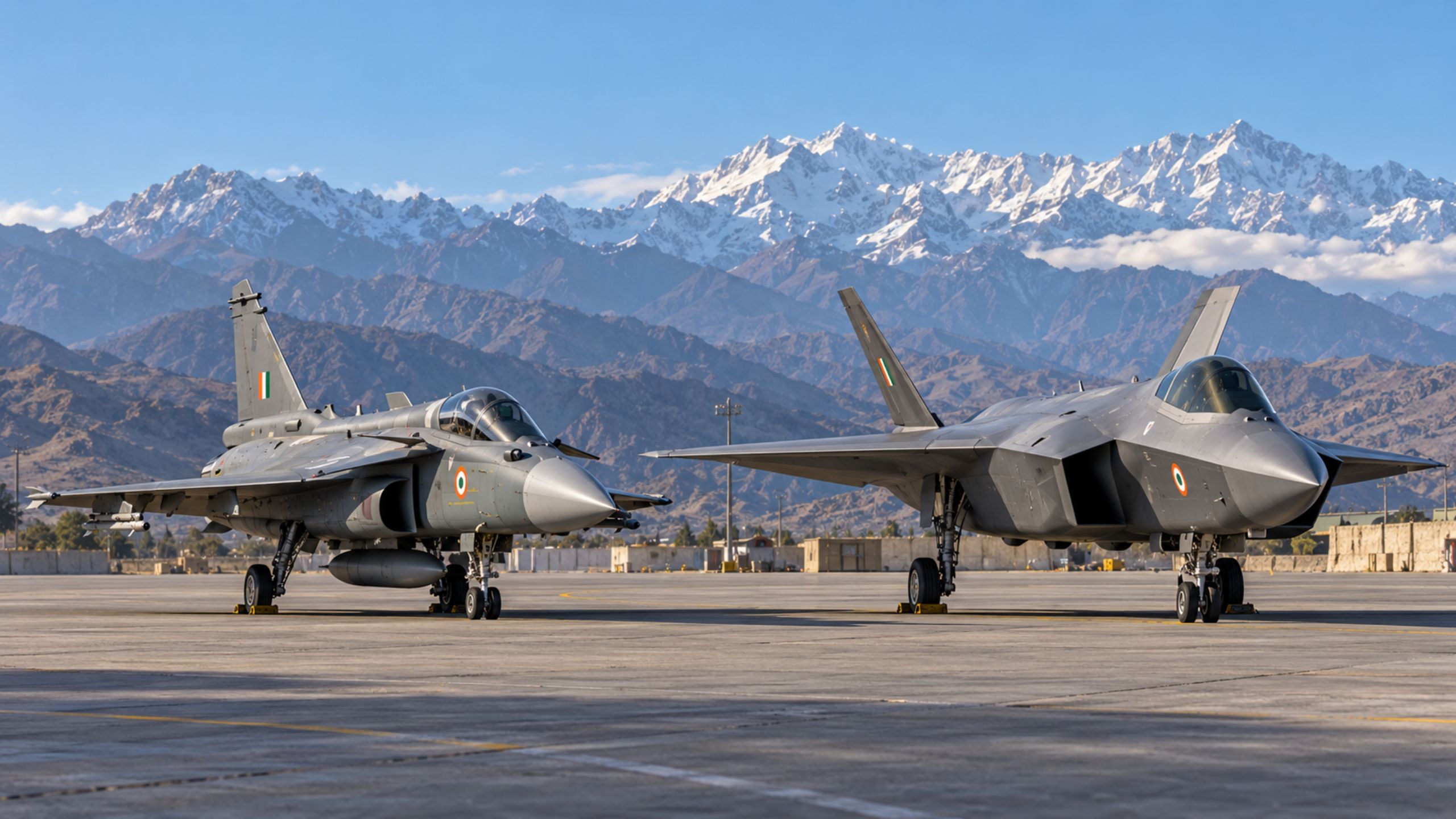
India’s LCA Mk2 medium weight fighter, is set to make its first prototype flight no later than September 2027, while the country’s stealthy fifth generation Advanced Medium Combat Aircraft (AMCA) will make its first prototype flight in September 2028. Official timelines from the Defence Secretary, the seniormost administrative official in the Ministry of Defence have brought clarity on the otherwise confusing timelines in India’s military aircraft programs.
The LCA Mark 2 prototype test flights are slated to take place between June and September next year, Defence Secretary Rajesh Kumar Singh has disclosed, offering a firm timeline for the key indigenous fighter program as India works to bolster its air combat strength against a rapidly growing regional threat that has already shifted generations.
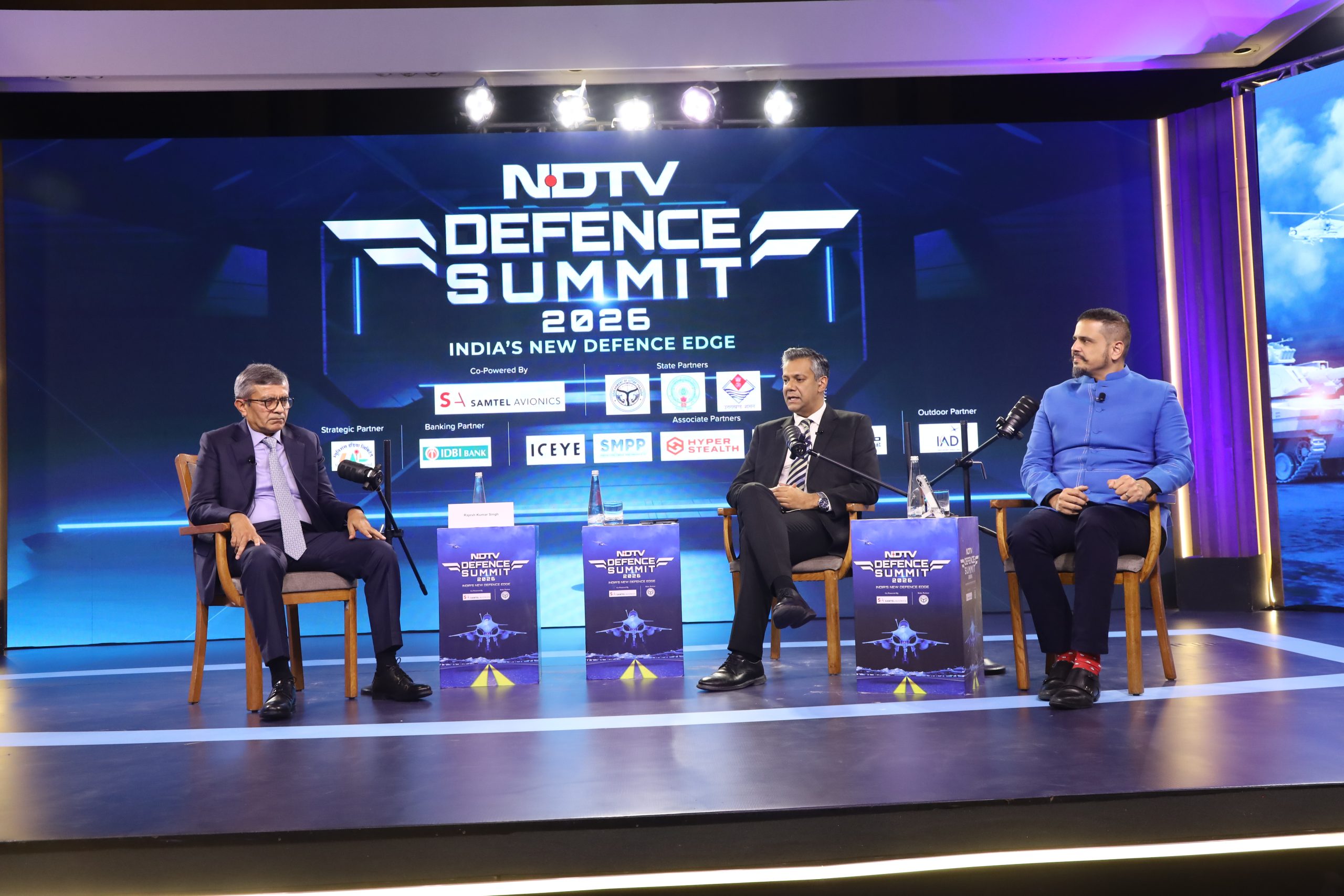
Test flights are due next year, with slippage by a few months probably around June or September next year, he said at a session hosted by NDTV Managing Editor Livefist founder Shiv Aroor & NDTV Senior Managing Editor Vishnu Som at the NDTV Defence Summit in Delhi on September 27.
The Defence Secretary also outlined major structural shifts in the country’s flagship fifth-generation fighter program, the Advanced Medium Combat Aircraft. The development and production of the AMCA, as reported in February by Livefist, has been formally opened to the private sector after state-run HAL failed to qualify on routine technical grounds during the initial tender evaluation. Clearing up misconceptions that HAL was intentionally sidelined, Singh explained that the major failed to meet specific routine technical criteria. The primary objective now is to establish a viable second fighter production line outside of HAL. The Request for Proposal has been issued to three qualified entities, including one stand-alone bid from the Tata Group and two private sector consortia with public sector partnerships, with the first AMCA prototype targeted to fly by September 2028.
Addressing questions over how a non-stealth platform would remain relevant in the 2030s against China’s fleet of over 500 operational J-20 stealth jets, Singh clarified that the government has taken no decision on importing foreign fifth-generation fighters like the Russian Su-57 as a stopgap measure. Instead, India is countering the stealth gap by integrating an artificial intelligence layer into its unified Integrated Air Command and Control System network, bringing the target acquisition, evasion, and sensor fusion capabilities of fourth and 4.5-generation fighters to significantly higher operational levels.
On the Tejas Mark 1A front, the Defence Secretary confirmed that Hindustan Aeronautics Limited (HAL) currently has 27 airframes ready on the assembly line, with 11 aircraft fitted with GE F404 engines and another 16 fitted with Category B flight engines that have completed test flights. With General Electric promising to deliver four F404 engines monthly through the rest of the year following global supply chain disruptions, the Indian Air Force is set to induct its first operational LCA Tejas Mark 1A squadron before the end of the financial year. HAL is targeting an annual production capacity of 24 aircraft thereafter, relying on three internal assembly lines and one private sector partner to deliver the total order of 180 aircraft by 2033.
To fill interim fighter squadron deficits, the Ministry of Defence is actively processing the Multi-Role Fighter Aircraft (MRFA) program, where bids submitted by France’s Dassault Aviation for 114 Rafale jets are currently under detailed examination. Singh defended the potential acquisition, citing the platform’s proven operational performance, supply chain commonality with the Navy’s Rafale Marine order, and France’s commitment to significant local manufacturing and indigenisation.
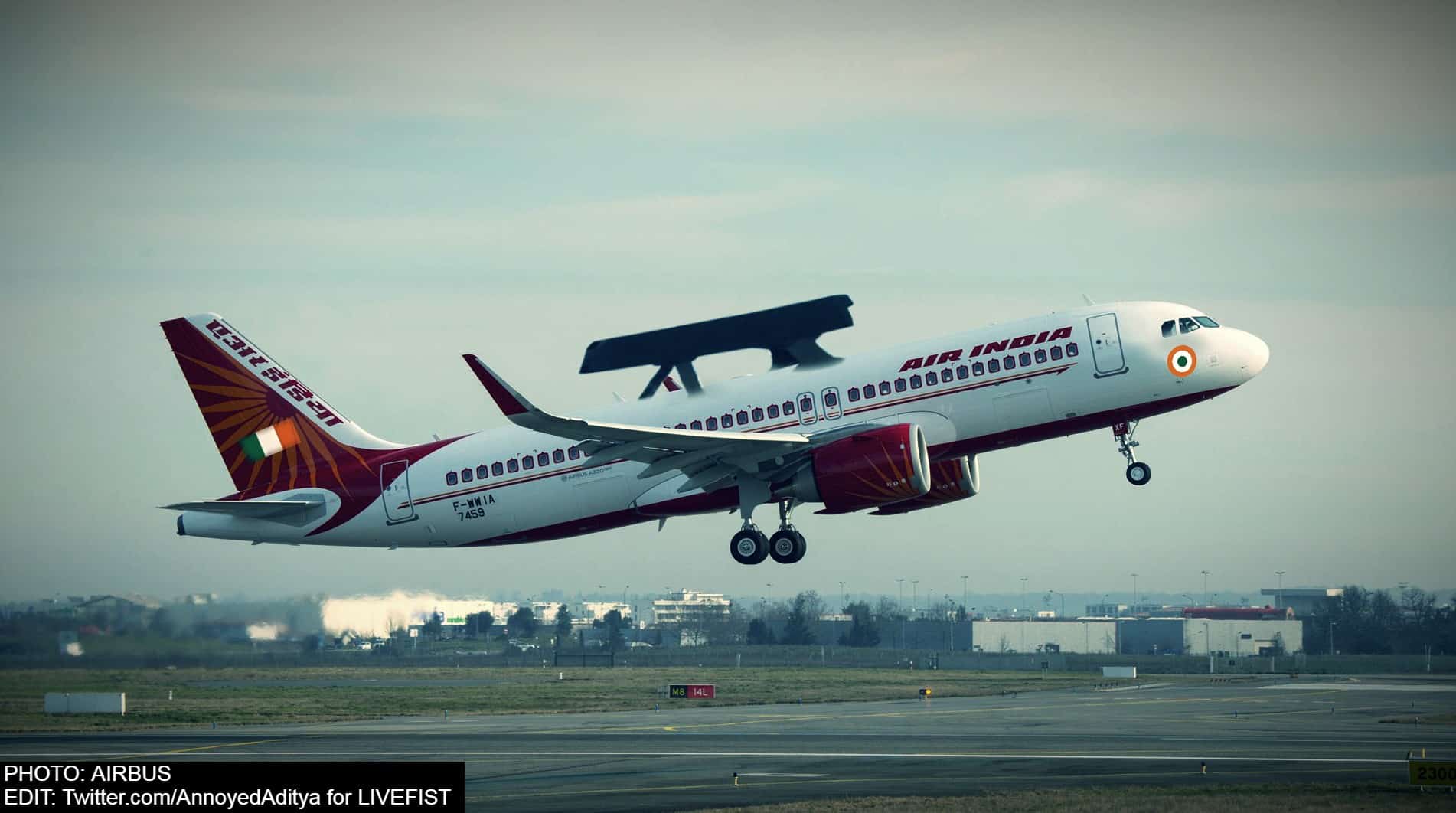
Simultaneously, long-standing bottlenecks surrounding key force multipliers have been cleared, said Singh. Cabinet approval has been granted and contracts signed to integrate indigenous Airborne Early Warning and Control (AEW&C) packages onto six former Air India Airbus A321 airframes, while final cost negotiations for new mid-air refueling tankers are in their concluding stages.
In the maritime domain, two critical submarine procurement programs are advancing rapidly. The strategic partnership project between Germany’s ThyssenKrupp Marine Systems and Mazagon Dock Shipbuilders Limited for Project-75I submarines has reached the final stage and is currently before the Cabinet Committee on Security for sanction. Concurrently, the ministry is examining an additional order of 3 Scorpene-class submarines to leverage Mazagon Dock’s active assembly line for swift fleet induction, with final government decisions expected shortly on both projects.
Beyond major platforms, the Ministry of Defence is engineering significant architectural changes in technology adoption, particularly in artificial intelligence, autonomous systems, and land warfare hardware. Rejecting global third-party software vendors (specifically Palantir) to protect sensitive military data, the ministry is building a sovereign, indigenous AI spine across the armed forces in partnership with the National AI Mission and domestic technology companies.
In the unmanned systems realm, the ministry is executing fast-track procurements featuring a six-month contracting window and an 18-month delivery timeline to build a robust domestic drone ecosystem.
To keep developmental momentum on the Zorawar light tank without stalling industrial partner Larsen & Toubro, the Indian Army has agreed to a phased induction plan, splitting the requirement of 59 tanks by starting with an initial order of 18 Mark 1 variants (with scaled down protection) before transitioning to advanced configurations on a total order of 59 tanks.
You can watch Shiv & Vishnu’s ground report on the Zorawar light tank at L&T’s near Surat in September 2025:
Reflecting on the transformation of India’s defence industrial base, Singh attributed the recent surge in defence exports, which reached Rs 38,400 crore rupees in the last financial year compared to Rs 686 crore rupees in 2013-14, directly to the long-term order visibility provided to domestic manufacturers. Having awarded nearly Rs 50 billion in capital contracts over the past two years with 80 percent directed to Indian vendors, the ministry has established a self-sustaining ecosystem capable of exporting advanced systems, including BrahMos cruise missiles, 155mm artillery ammunition, and radar systems, to over 80 nations globally.
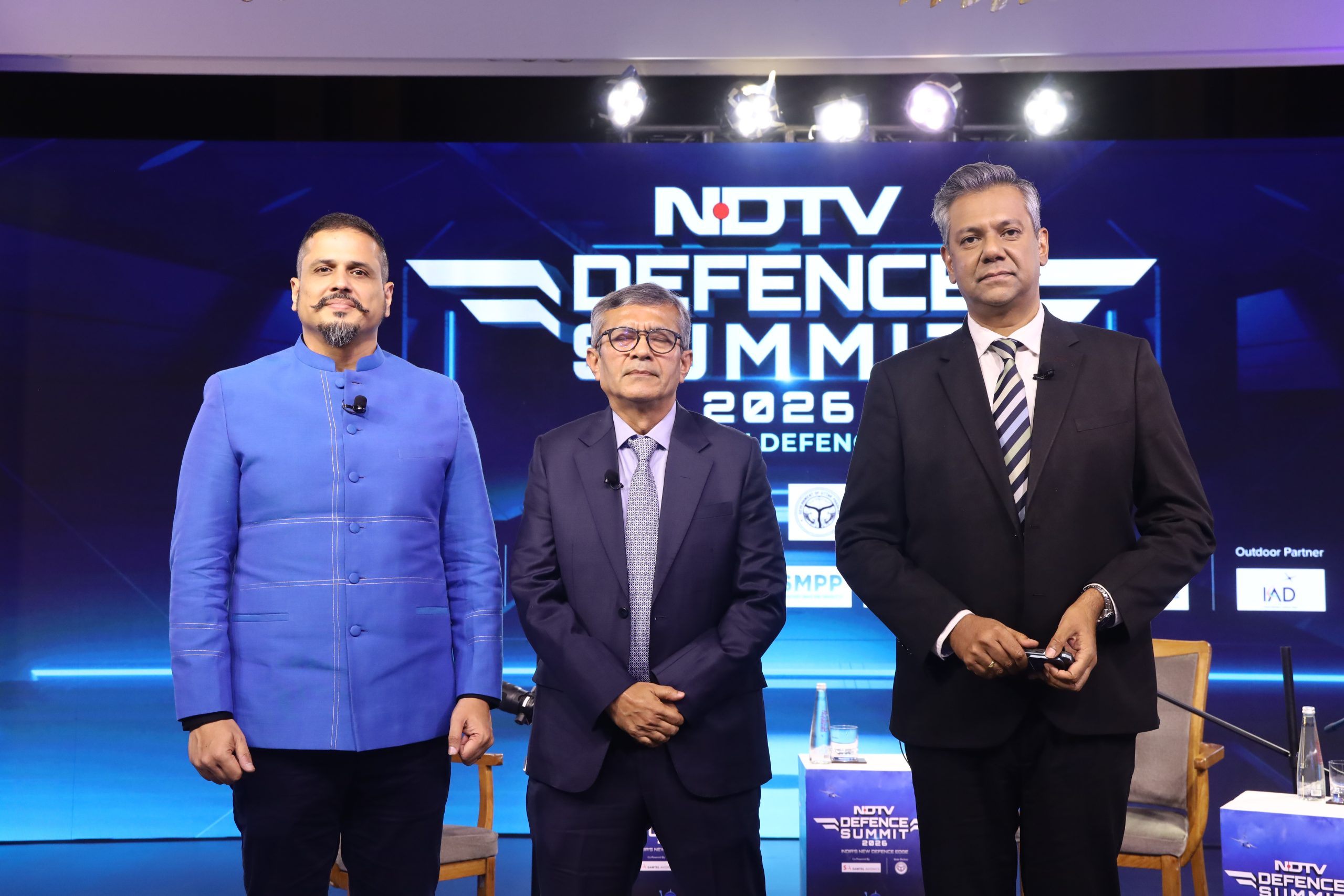
The Defence Secretary, who holds the additional charge of administering the DRDO, also indicated that he has leveraged his unique position to mediate discrepancies between the services and India’s defence labs. With unified administrative oversight spanning capital acquisitions and defence research, the Ministry of Defence is focused on streamlining development cycles, eliminating inter-agency friction between laboratories and armed forces personnel, and building a multi-vendor industrial base to secure national defense requirements, he said.
Watch the full conversation here: